Slab Leak Reroute in Mesa, AZ
The fix that never touches your floor. When the pipe under the slab is aging out, we run a new line through walls and attic, cap the old one, and end the leak cycle for good.
New Line. New Route. Old Leak Retired.
A reroute answers a simple question: why keep repairing a pipe you cannot see, buried in concrete, when the water can take a better road? The crew maps a route through your walls and attic, runs new PEX line along it, ties it into your fixtures, then caps and drains the old line under the slab. The leak does not get patched. It gets abandoned, dry and harmless, forever.
For Mesa tract homes this is often the smart money move. The same building wave that put copper under your slab put it under every house on the street, and copper that has leaked once at year forty tends to leak again at year forty one. A reroute costs more than one spot repair and less than three.
- No slab cutting and no floor replacement
- New PEX line rated for Arizona heat and water
- Old line capped and drained, verified dry
- Route mapped with you before any opening is cut
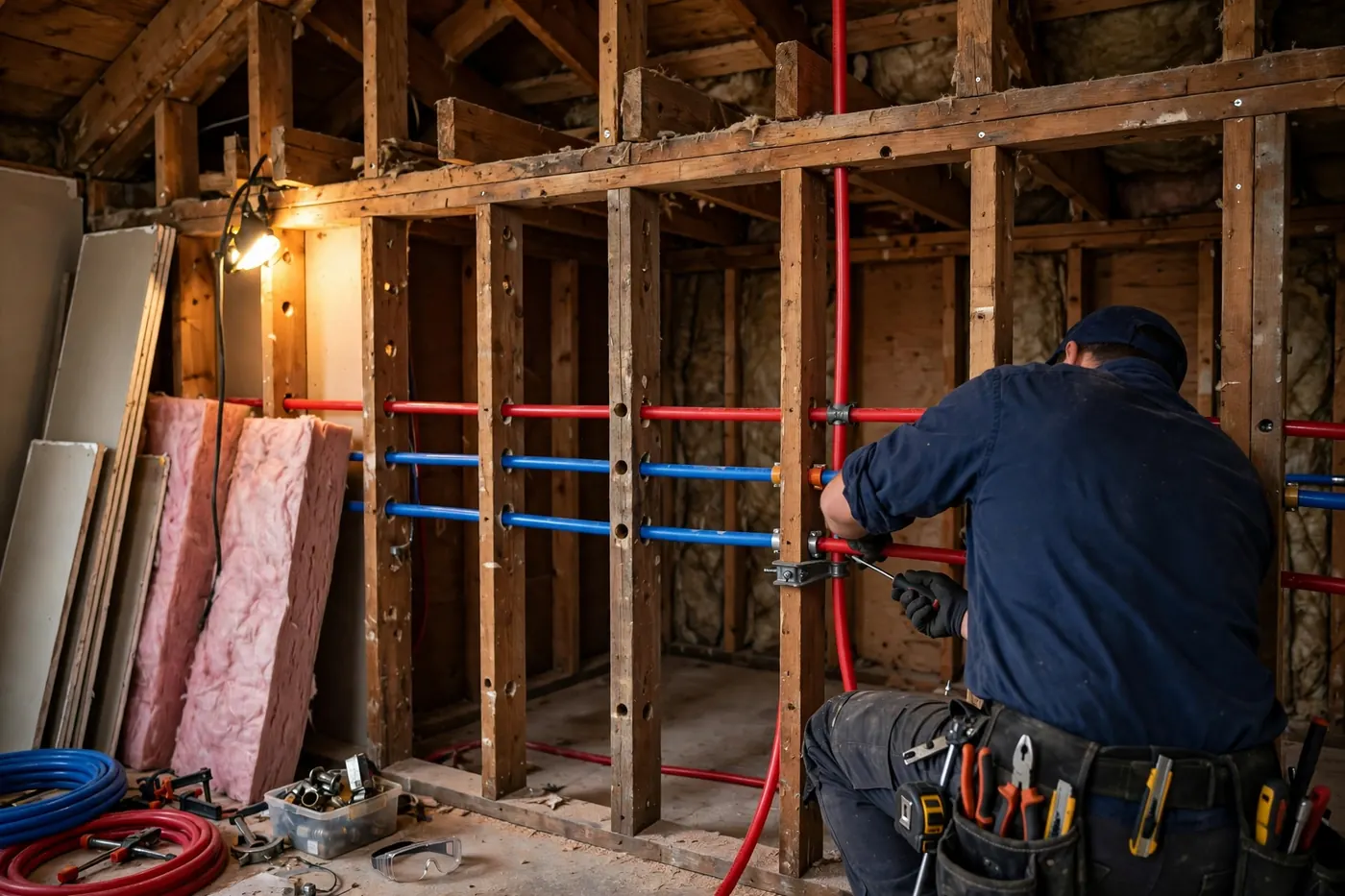
Every reroute starts as a drawn route, agreed with you before work begins
What a Reroute Includes
A complete new path for your water, planned and tested end to end.
Single Line Reroute
The classic job: one leaking hot or cold line replaced by a new run through the attic and walls. Most Mesa reroutes are this job.
Hot and Cold Pair
When both lines are the same age, rerouting the pair in one visit costs far less than two separate emergencies a year apart.
PEX and Copper Options
PEX for flexibility and corrosion resistance, copper where you prefer it. The quote explains the trade off in plain terms.
Old Line Retired Properly
The abandoned line is capped at both ends and drained, so no standing water sits under your slab to cause smells or moisture.
Patch Ready Openings
Drywall openings are cut square and tidy, ready for a fast patch. No concrete dust, no floor demolition, no flooring bill.
Full Pressure Test
The new line is pressure tested along its whole route before walls close up. You see the gauge hold with your own eyes.
Reroute, Spot Repair or Repipe?
Three honest paths after a locate. Here is how Mesa homeowners choose between them.
| Question | Spot Repair | Reroute | Full Repipe |
|---|---|---|---|
| Best when | One leak, healthy pipe | Aging line, repeat leaks | Every line in the home is failing |
| Floor damage | One small opening | None | None |
| Time on site | Usually one day | Usually one day | Several days |
| What it solves | This leak | This line, permanently | The whole system |
| Watch out | Next weak spot can leak later | Other old lines still age | Biggest scope and cost |
A note on the third column: a full repipe is a bigger job than this service sells, and we will tell you honestly if your home needs one. What we quote and stand behind is the located repair and the reroute. Compare the money side in the Mesa slab leak cost guide.
When Reroute Beats Spot Repair
Choose the reroute when the locate tells a story bigger than one hole. The exposed copper is pitted in several places. This is the second or third leak on the same line. The pipe dates to the original build and the whole street is having the same year. Or your floor is the expensive kind, the tile you cannot match anymore, the wood you do not want cut. In each case the reroute trades a slightly bigger day today for an end to the pattern.
Choose the spot repair when the pipe around the leak is clean and thick, the leak traces to one bad joint or one unlucky pinhole, and the rest of the line tests healthy. The crew will show you the exposed pipe and talk it through, because the right answer depends on your pipe, not on a sales script. Every job still starts the same way, with the detection visit that starts every job proving where the water is going.
How a Reroute Runs
Mapped, run, capped and tested, usually inside one working day.
Locate and Map
The leak is pinpointed and the new route is drawn through walls and attic, with tie in points agreed with you.
Run the New Line
New PEX is run along the route, connected to the fixtures it feeds, and the old line is capped and drained.
Test and Walk Through
Full pressure test on the new route, then a walk through of every opening and what the patch plan looks like.


Second Leak on the Same Line?
That is the pipe telling you its plan for the year. A reroute changes the plan. Get the route mapped and priced in writing.
Call (480) 555-0147How a Reroute Route Gets Planned
A reroute is drawn before it is priced. The crew maps where the new line can run: up through a wall cavity, across the attic on insulated runs, or back to a manifold that gathers the lines of the home in one accessible place. The shortest route is not always the right one. Attic runs need insulation against summer heat, wall runs need bays that stay clear of wiring, and every route needs shutoff access that the next plumber to visit will thank us for.
The old line is then retired properly. It is drained, capped at both ends and taken out of service, so no forgotten branch keeps feeding the leak underground. The new line is pressure tested on its own before it joins the house system, and the test result goes into your paperwork with the route map.
Most Mesa reroutes finish in a day, with water back on the same evening. The slab keeps at most one small opening, the locate hole, and the floor patch cures flat. What changes for good is the map: your water now travels above the concrete, where any future problem is visible, reachable and cheap to fix.
- Route drawn and walked with you before pricing
- Old line drained and capped at both ends
- New line pressure tested before it joins the house
- Water back on the same evening on most jobs
Related Services
The reroute is one of three paths after a locate. Compare them all.
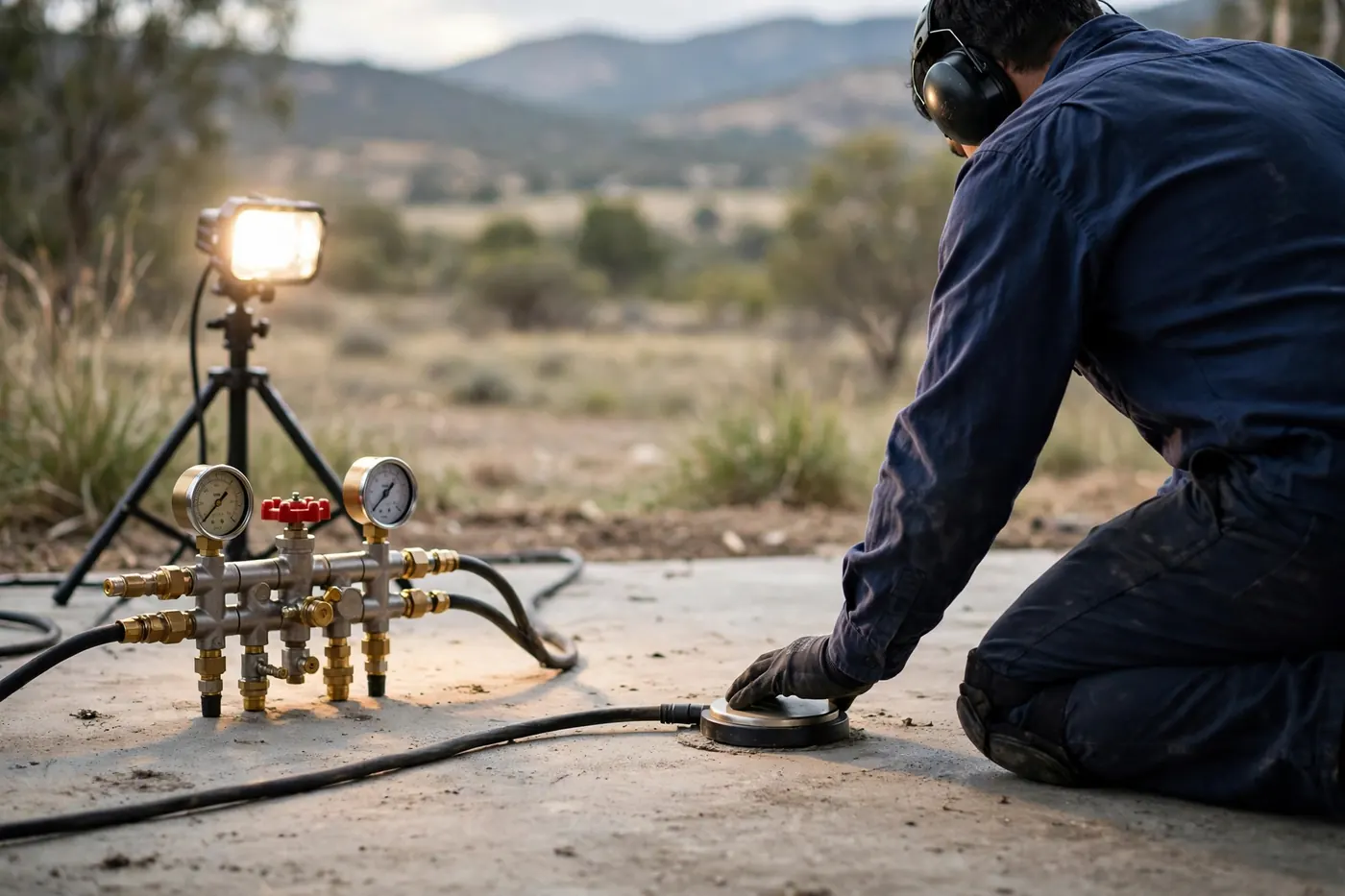
Slab Leak Detection
No reroute gets priced until the leak is pinpointed and the pipe story is clear.
Start with detection →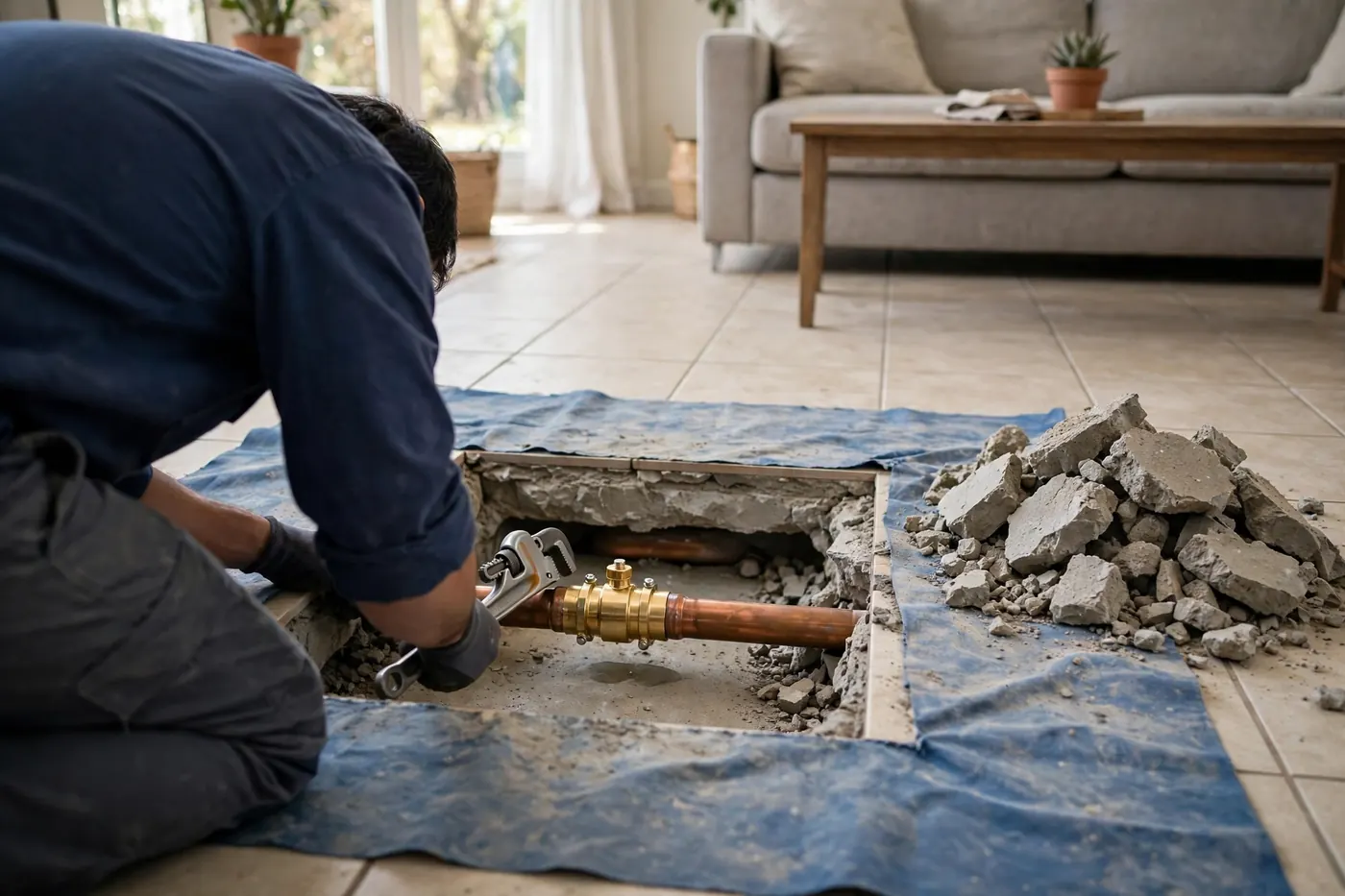
Slab Leak Repair
One leak in healthy pipe? A spot repair at the pinpoint may be all you need.
See spot repair →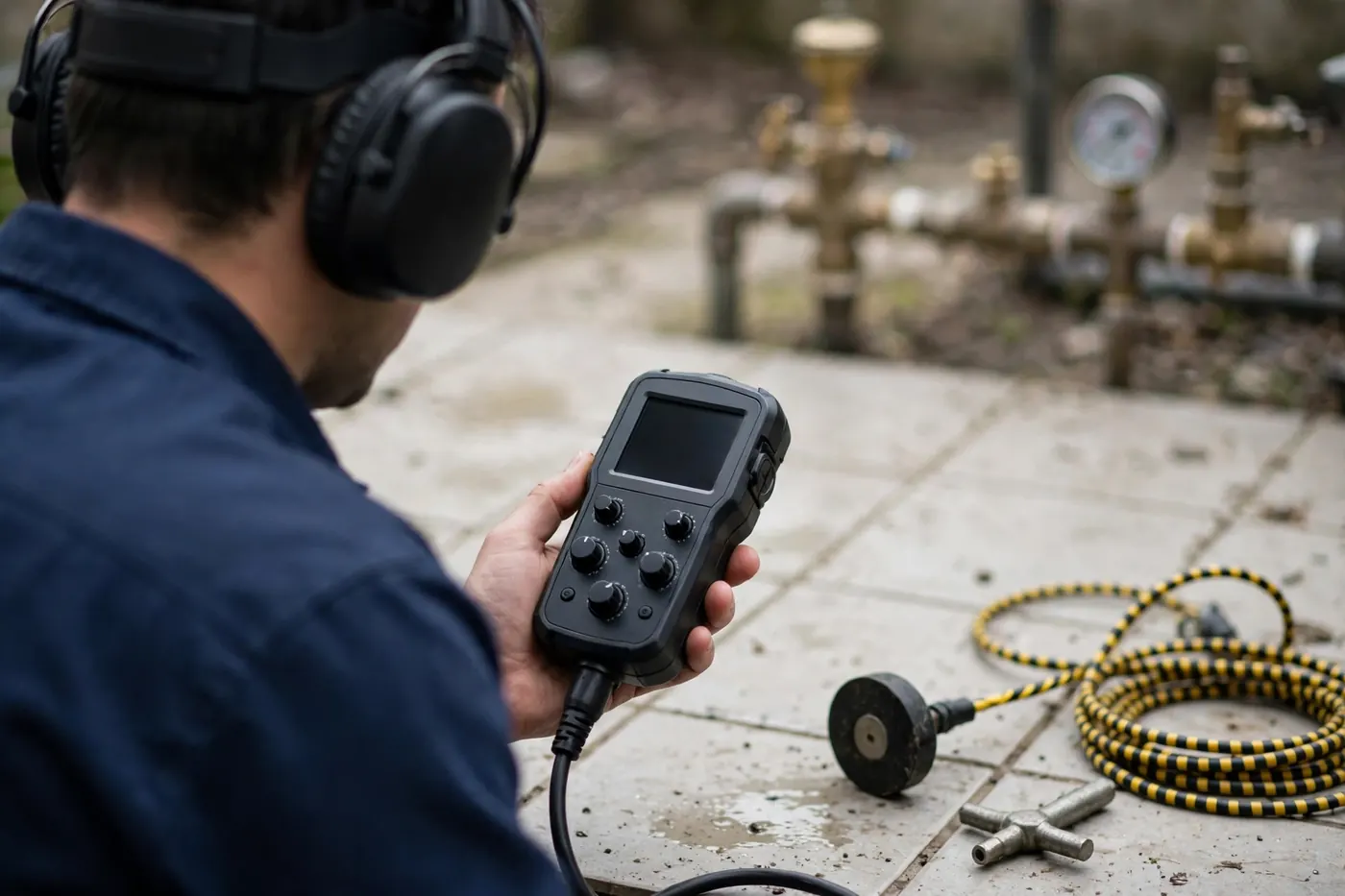
Electronic Leak Detection
Acoustic listening, line tracing and pressure proof. The located line tells us whether repair or reroute is the honest call.
See the method →Slab Leak Reroute FAQs
What Mesa homeowners ask about the no jackhammer fix.
What exactly is a slab leak reroute?
The leaking line under the slab is abandoned in place, capped and drained, and a new line is run through walls and attic space to feed the same fixtures. Your water takes a new road that never touches the slab, so that pipe can never leak under your floor again.
Will a reroute tear up my walls?
A reroute needs small, planned openings in drywall where the new line runs and ties in. Those openings are far easier and cheaper to patch than a cut concrete slab and a replaced floor, and the crew maps the route with you before any cutting starts.
How long does a reroute take in a Mesa home?
Most single line reroutes finish in one day. Larger jobs, like rerouting both hot and cold lines or a full home, can run longer. The written quote includes the expected timeline before you approve anything.
Is PEX safe for my drinking water?
Yes. PEX is the standard modern piping for residential water lines across Arizona, rated for hot and cold supply, resistant to the corrosion that eats copper in desert water, and flexible enough to run through walls with very few fittings.
Does a reroute cost more than a spot repair?
Up front, usually yes. Over the life of an aging line, often no, because one reroute ends the cycle of leak, repair, leak again. Our cost guide compares the two paths with the factors that matter in Mesa homes.
End the Leak Cycle in Your Mesa Home
- Route mapped with you before any cutting
- New PEX line, pressure tested along its full route
- Old line capped and drained, verified dry
- Hours: Mon to Sat, 7 am to 7 pm
If this is not your first slab leak, say so on the call. Repeat leaks change the recommendation, and the reroute quote will be ready next to the repair quote.
Do Not Repair the Same Pipe Twice
Locate it, price both paths, and reroute the line that keeps failing. One day of work, years of quiet floors.
Call Now for Detection Book a Visit (480) 555-0147