Electronic Leak Detection in Mesa, AZ
The instruments come before the hammers. Acoustic listening, electronic location and pressure isolation prove where your slab leak is, so the repair opens your floor once, in the right place.
We Listen to the Leak Before We Touch the Floor
Water escaping a pressurised pipe makes noise and changes pressure, and both can be measured from above the concrete. That is the whole idea behind the method this page explains, and it is the method behind our slab leak detection in Mesa service. A microphone on the floor hears what your ear cannot. Isolation valves tell us which line is guilty. Location equipment draws the map.
The result is a mark on your floor you can stand on, plus a pressure result you can watch. Compare that with the old way: a plumber with a jackhammer, a hunch and your tile floor as the search area. Electronic detection is not a gadget extra. On a slab, it is the difference between a repair and a renovation.
- Non invasive first, every instrument works from the surface
- Confirmed twice, by sound and by pressure, before marking
- One mark, one opening when repair follows
- Results explained in plain language at your kitchen table
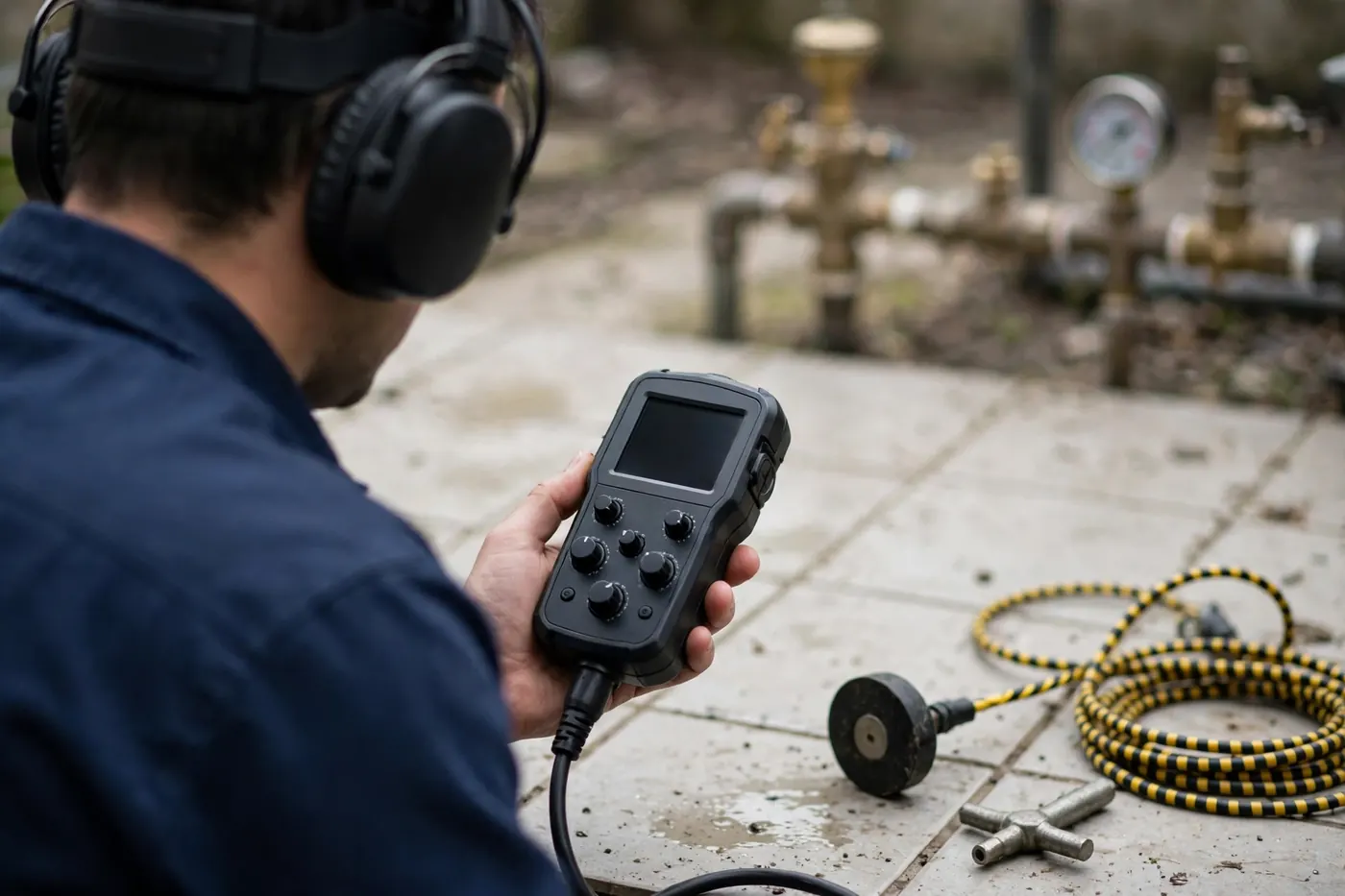
Detection work is quiet, surface level work until the mark is made
The Detection Toolkit
Six ways the crew corners a leak under concrete, used in the order your home needs them.
Acoustic Listening
Ground microphones and listening discs pick up the hiss and vibration of escaping water through the slab. The loudest point sits close to the leak.
Electronic Location
Line tracing equipment maps where each pipe actually runs under your floor, so the sound gets read against the real route of the pipe, not a guess.
Pressure Isolation
Lines are capped and pressurised one at a time. The line that cannot hold pressure is the leaking line. Simple, provable, and decisive.
The Meter Test
Your water meter is the first witness. With the house shut down, a moving leak indicator proves water is escaping somewhere on the property.
Tracer Techniques
For stubborn or deep lines, tracer methods help the signal stand out from background noise, so a faint leak still gets a firm mark.
Thermal Clues
Hot line leaks change the temperature pattern of your floor. Warm path mapping supports the acoustic evidence on hot side leaks.
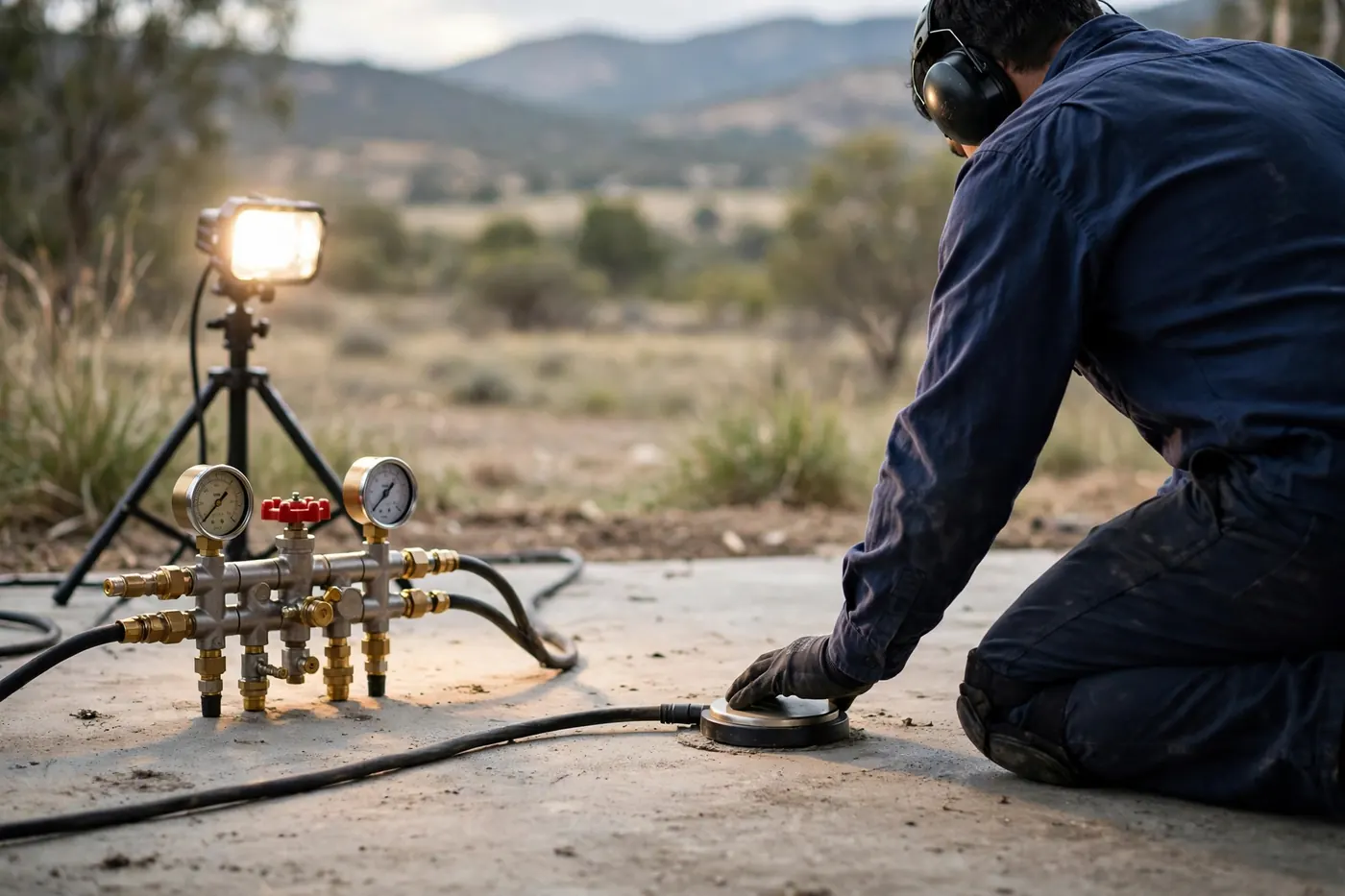
Every pipe in these homes runs under concrete. Finding one leak by digging alone is a lottery
What a Pinpoint Buys You
Exploratory digging charges you three times: for the holes that miss, for the floor that has to be replaced over a trench, and for the days your home stays a building site. A pinpoint charges you once, for information, and then makes every later step smaller.
- One opening at the mark instead of a search trench
- Flooring survives everywhere except the repair spot
- Real prices because the repair scope is known, not guessed
- Faster decisions between repair and reroute, with evidence
Already seeing the warning signs? Read the signs of a slab leak homeowners notice first, then book the visit while the mark is still easy to make.
What Happens at the RepairA Detection Visit, Step by Step
Quiet equipment, clear results, and a marked floor inside a couple of hours.
Confirm the Leak
Meter test and a look at your signs and bills. We prove water is escaping and rule out toilets, irrigation and fixtures first.
Isolate the Line
Hot and cold lines are tested separately under pressure. The line that drops is the line that leaks. No ambiguity.
Locate and Mark
Acoustic and electronic location converge on the spot. It gets marked, explained and priced for repair or reroute in writing.

Guessing Is the Expensive Option
One detection visit replaces every guess with a mark, a pipe story and two written prices. Book it before the water writes its own story in your floors.
Call (480) 555-0147Three Instruments, One Mark
The acoustic listener does the famous part of the job. Water escaping a pressurised line makes a sound the human ear cannot separate from ordinary house noise. A ground microphone hears it through tile, wood and carpet, and the loudest point on the floor is rarely more than a few inches from the break.
Pressure testing does the proving. Each line is isolated and charged on its own. A line that holds pressure is innocent, whatever the bill suggested. A line that bleeds pressure is guilty, and the gauge shows how fast it is losing water before a single tool touches the floor.
Line tracing draws the map. A signal sent along the pipe lets the crew follow its path under the slab, so the mark lands on the pipe run itself and not on a guess beside it. Together the three readings agree on one spot, and that agreement is what the visit buys: a mark the repair crew can open with confidence.
Homes talk back during a locate. Pool equipment, irrigation timers and water softeners all move water on schedules that can mimic a leak. The visit rules them out one by one, which is why a real locate takes longer than a guess and ends with a mark instead of a shrug.
- Acoustic pinpoint to within inches on most floors
- Every line pressure tested in isolation
- Pipe path traced, not assumed
- One agreed mark before any opening is cut


Related Services
Detection is the start of the job. These pages cover the rest of it.
Slab Leak Repair
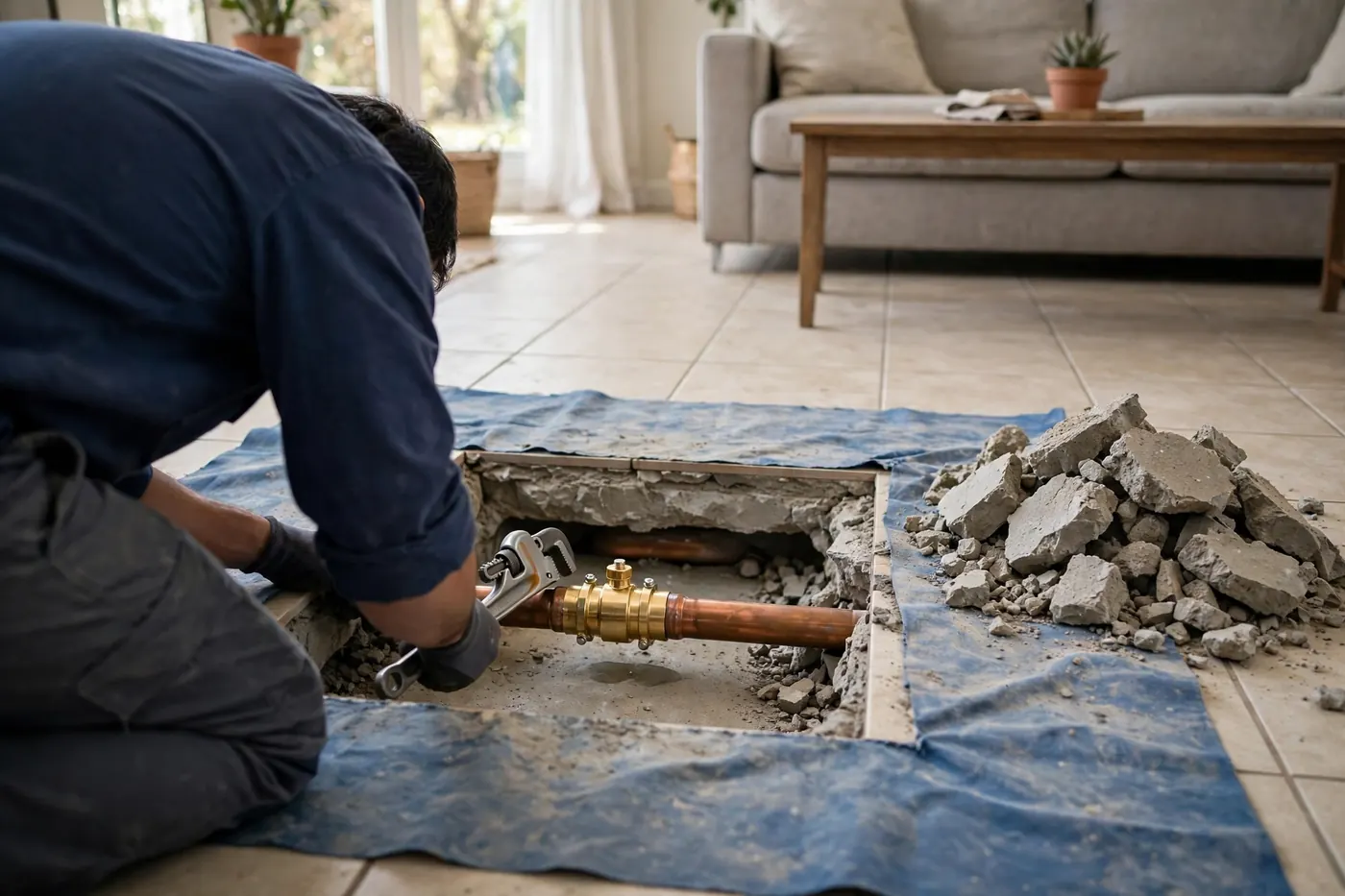
The mark becomes one small opening, a tested repair and a patched floor.
See the repair →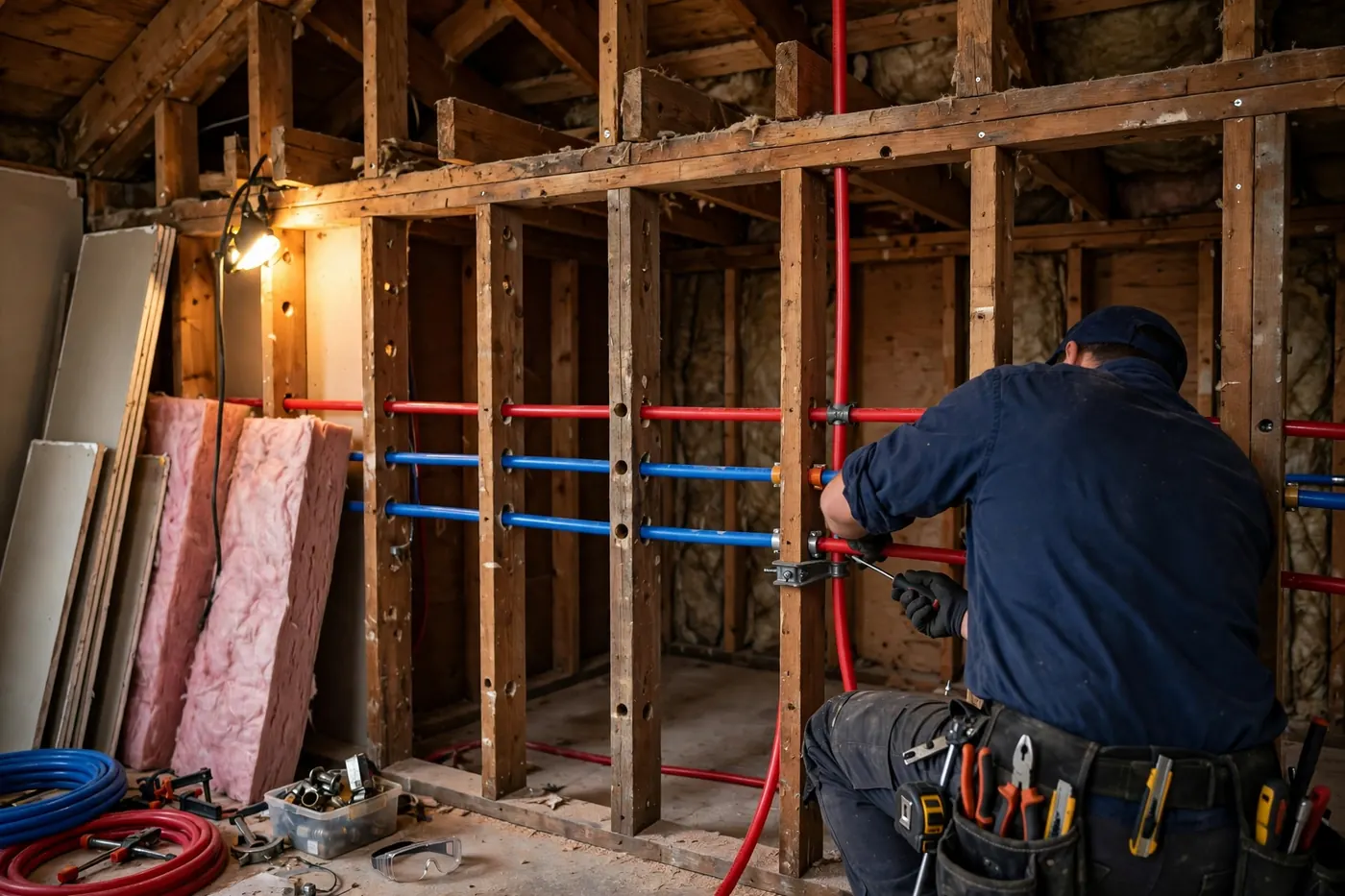
Slab Leak Reroute
When the located pipe is aging out, run the new line around the slab instead.
See the reroute →
Slab Leak Detection
The visit itself. Meter check, pressure test and one marked spot on your floor, with written options before repair is discussed.
Start with detection →Post-Tension Slabs: Why the Exact Spot Matters
Many Arizona homes built in recent decades sit on post-tension slabs, concrete reinforced with steel cables that are pulled tight as the slab cures. Those cables hold the slab together, and cutting or drilling into one is dangerous and expensive to correct. A leak search that ends in guesswork and exploratory holes puts that risk on the table.
A pinpoint locate keeps the opening small and deliberate. When the leak is marked first, any work happens at one known spot instead of across the room. If you are not sure what kind of slab your home has, ask when you book, and read the signs of a slab leak guide while you wait. Once the mark is made, the next step is a spot repair in Mesa or a reroute, priced in writing.
Electronic Leak Detection FAQs
How the pinpoint method works, answered plainly.
How accurate is electronic leak detection?
Accurate enough to change the whole job. The equipment narrows the escape to a marked area on your floor, and the crew confirms with pressure isolation before anyone cuts. The final proof is always the exposed pipe, and because the opening starts at the mark, a locate that is off by inches costs a slightly bigger patch, not a second trench.
Do you have to shut off my water during detection?
Briefly, at points. Isolation testing turns lines off one at a time to identify the guilty one, and the meter test needs the house quiet for a short window. Water is back on between tests, and the crew tells you before each shut off so nothing surprises you.
How long does a detection visit take?
Most Mesa detection visits run about one to two hours, depending on the size of the home and how many lines need isolating. You get the marked location, the pipe story and written repair options at the end of the same visit.
Can the equipment find leaks that are not under the slab?
The same acoustic and isolation methods trace pressurised lines in walls and ceilings, and the crew will tell you if the evidence points somewhere other than the slab. This service specialises in under slab leaks, so if your problem turns out to be a drain line or a fixture, you will hear that honestly, with the meter and pressure results to show why.
What happens right after you find the leak?
You get choices, not pressure. The spot is marked, the pipe condition is explained, and spot repair and reroute are priced in writing. Many Mesa homeowners approve the fix the same visit, and the crew is already on site to start it.
Get the Leak Located, Not Guessed At
- Acoustic and electronic location from the surface
- Pressure isolation proves which line is leaking
- Written repair options at the end of the visit
- Hours: Mon to Sat, 7 am to 7 pm
Tell us the signs you have noticed and the age of the home. The crew brings the right kit for your build era.
The Mark Comes First
Book the detection visit and turn a suspicion into a spot on the floor you can point at.
Call Now for Detection Book a Visit (480) 555-0147