Signs of a Slab Leak: Catch It While It Is Cheap
Slab leaks announce themselves quietly: a warm floor, a climbing bill, a sound in the wall at night. Learn the six signs Mesa homeowners see first, run a ten minute meter test, and know exactly when to call.
Your House Is Already Telling You
Almost every expensive slab leak repair we see in Mesa started as a cheap one that got explained away. The warm floor was the desert sun. The bill was the summer. The sound was the house settling. Houses do not settle with a hiss, and water bills do not climb on their own. The six signs below are the ones that show up in story after story, usually two or three at a time, weeks before any visible water appears.
Read them against your own home honestly. One sign can have an innocent cause. Two signs together are a pattern, and a pattern under a concrete slab deserves instruments, not patience. That is the moment slab leak detection in Mesa costs the least and saves the most.
The Six Signs, One by One
What each sign usually means under a Mesa slab, and the smart move for each.
A Warm Spot on the Floor
What it usually means: A hot water line is leaking under the slab and heating the concrete and flooring above it, around the clock.
What to do now: Walk the room barefoot at night when the house is cool. If one patch is clearly warmer, mark it with tape and call. That patch is prime evidence.
The Water Bill Jumped
What it usually means: Water is leaving the system day and night. Even a modest leak runs up thousands of gallons a month on a Mesa bill.
What to do now: Compare this bill with the same month last year, not just last month. A steady climb with no new use is the pattern to act on.
Running Water, Everything Off
What it usually means: Escaping water makes a faint hiss or rush inside walls and floors. Quiet houses at night reveal it best.
What to do now: Turn off every tap, the washer and the irrigation, then listen at the wall nearest the bathrooms. Sound with no source means a visit.
Pressure Feels Weaker
What it usually means: Water escaping under the slab is water that never reaches your shower. Pressure fades slowly, so it creeps up on a household.
What to do now: Check two taps on different sides of the house. Weak everywhere points to supply loss. Weak at one fixture is usually the fixture itself.
Floors Crack, Lift or Stay Damp
What it usually means: Moisture from below swells wood and laminate, loosens tile, and feeds damp patches in carpet along one wall.
What to do now: Photograph the damage with a date on it. Photos help the crew, and they help an insurance claim if the leak has been running a while.
The Meter Never Rests
What it usually means: The leak indicator on your meter turns even with the house fully shut down. Water is going somewhere it should not.
What to do now: Run the ten minute meter test in the section below. If the dial moved, you have proof, and proof is the right reason to book detection.
What to Do in the First Hour
Three moves that protect your home and prove the problem, before any crew arrives.
Slow the Water
If water is actively surfacing, shut the house main valve, usually at the front hose bib or the meter. For signs only, leave the water on and move to step two.
Run the Meter Test
Turn off every tap and appliance. Note the meter reading and the small leak indicator dial. Wait ten minutes without using water. If the dial moved, water is escaping somewhere.
Record and Call
Photograph warm spots, damp patches and the meter. Save the last two water bills. Then call (480) 555-0147 and describe the signs. Evidence speeds everything up.
Slab Leak or Foundation Problem?
Cracks worry homeowners, and in the East Valley they have two common authors. Expansive desert soil swells and shrinks with moisture, and foundations move with it, cracking tile and drywall and making doors stick. A slab leak writes a similar looking chapter, because water escaping under the slab changes the soil moisture on one side of the home and lifts or settles that corner.
The difference is water evidence. Foundation movement alone does not turn your meter, warm your floor or raise your bill. If the cracks arrive with any of the six signs, plumbing is involved until proven otherwise, and the proof is quick: the isolation testing on our electronic detection page rules a pressurised line in or out in a single visit. If the lines test clean, you will hear that plainly and a foundation specialist becomes the right next call.
Rule It In or Out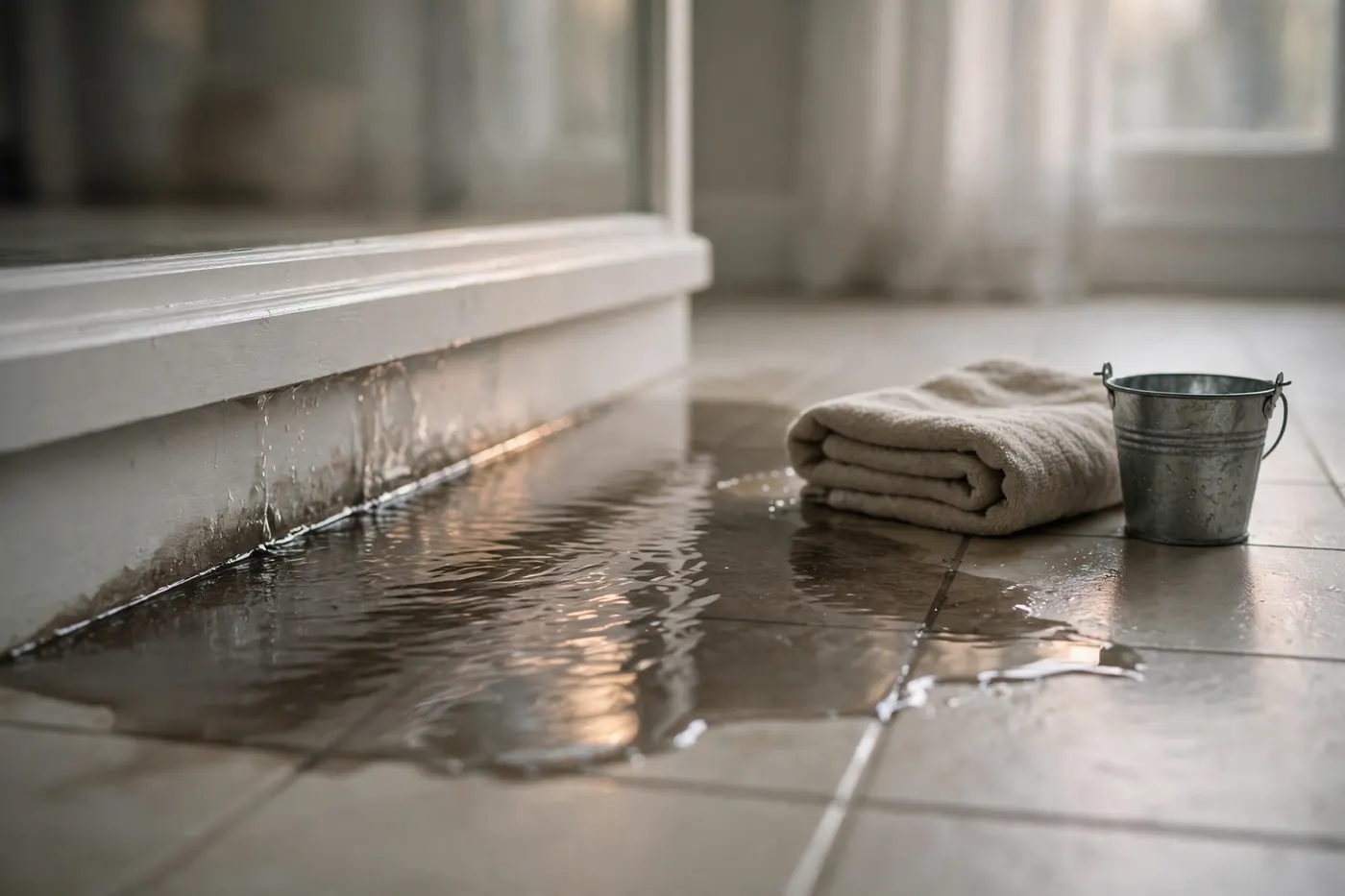
Cracks plus water signs point to plumbing. Cracks alone may be the soil talking
Floors and Fixtures Talk First
From Signs to Certainty
The next step after this page, whichever way the evidence points.
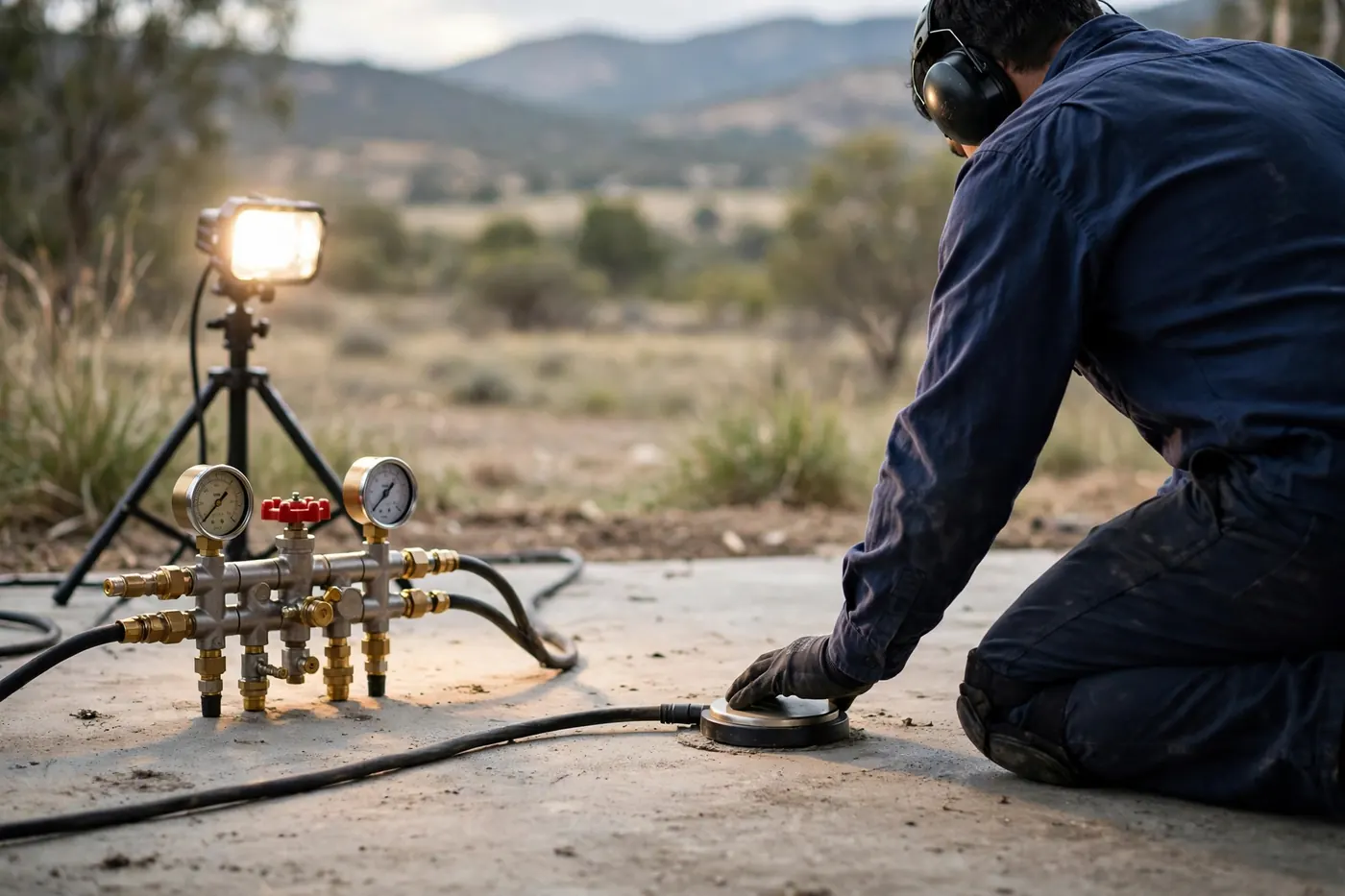
Slab Leak Detection
Signs raise the question. Detection answers it with a mark, a pressure result and written options.
Get the answer →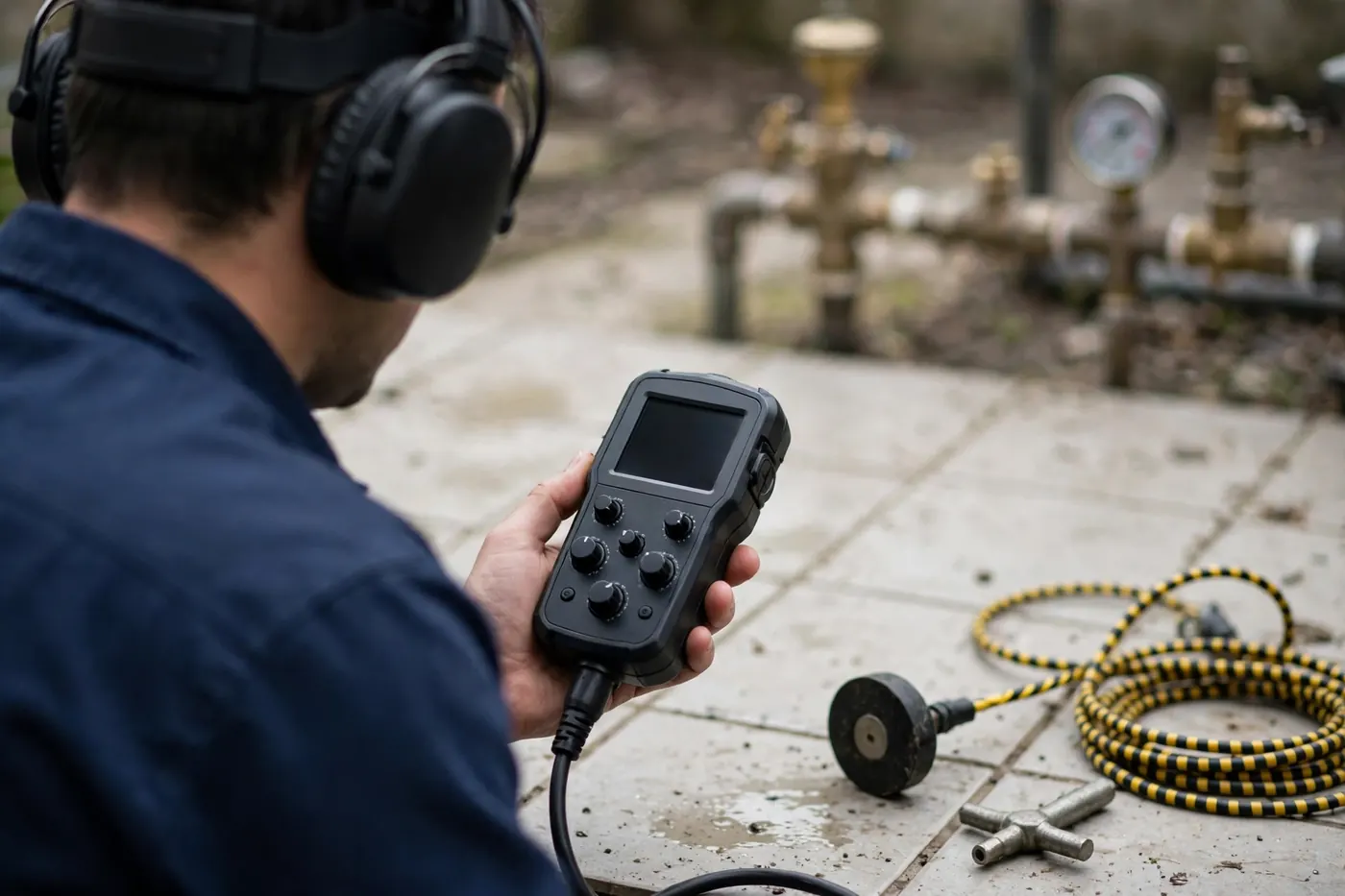
Electronic Leak Detection
How acoustic and electronic tools turn faint sounds into a precise location under concrete.
How the tools work →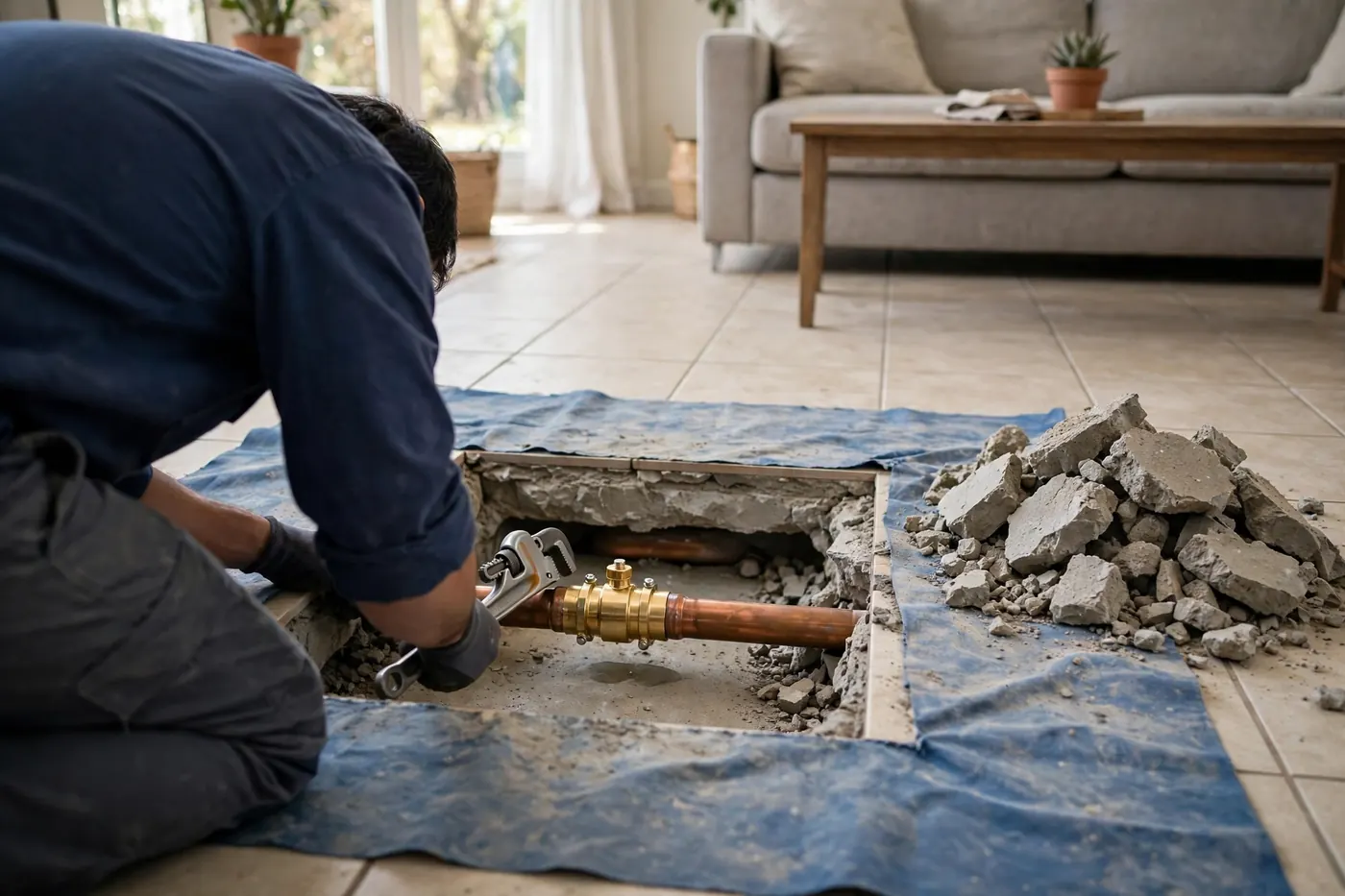
Slab Leak Repair
Once the leak is located, a spot repair at the pinpoint fixes it through one small opening in the floor.
See the repair →What Happens If a Slab Leak Is Left Running
A slab leak does not stay a plumbing problem for long. Water under pressure keeps soaking the soil beneath the concrete, and wet soil can swell, soften or settle unevenly. Over weeks and months that movement shows up as hairline cracks in tile, doors that start to rub and gaps along the baseboards.
Moisture also finds its way up. Damp flooring, cabinet bases and the bottom of the drywall give mould a place to start, and every month of running water adds to the bill. In a Mesa home on a slab, the cheapest version of this repair is always the earliest one: electronic leak detection to prove where the water is going, then a choice between slab leak repair and a reroute. If money is the worry, the slab leak cost guide shows what moves the number.
Slab Leak Signs FAQs
The questions that follow the first warm spot on the floor.
Can a slab leak fix itself or go away on its own?
No. A pressurised line under a slab does not heal. Mineral deposits can slow a pinhole briefly, which fools some homeowners, but the corrosion that opened it keeps working and the leak returns bigger. The only direction an untreated slab leak travels is worse.
How fast does a slab leak damage a home?
Faster than most people expect. Water under pressure can move hundreds of gallons into the soil in a week, and flooring, cabinets and baseboards start showing it within weeks. The expensive damage is rarely the pipe. It is everything the water touched while the leak waited.
Will a small slab leak really show on my water bill?
Yes, and often it is the first proof. Mesa bills arrive monthly, and a leak running around the clock adds up even at a trickle. A jump you cannot explain with guests, irrigation or a new appliance deserves a meter test, which takes ten quiet minutes at home.
What does the water meter test actually prove?
It proves water is leaving your plumbing system somewhere with everything shut off. It does not by itself prove the slab is the location, which is why the visit continues with isolation testing. But as a first step it turns a suspicion into a fact you can act on.
I can smell mildew but I cannot see any water. Is that a sign?
It can be. Moisture wicking up through a slab feeds mildew and mould in baseboards, carpet padding and the bottom of drywall long before liquid water shows on the surface. A musty room with no visible source, especially beside a bathroom or kitchen wall, earns a detection visit.
Two Signs or More? Book the Visit
- Meter and pressure proof, not opinions
- Pinpoint mark if a line is leaking
- Written options for repair or reroute
- Hours: Mon to Sat, 7 am to 7 pm
Describe the signs on the call, including when you first noticed them. The timeline helps the crew read your home faster.
Signs Do Not Resolve. Leaks Do Not Either.
Book detection while the story is still about signs, not about floors, cabinets and claims.
Call Now for Detection Book a Visit (480) 555-0147